


Choosing a residential treatment center is one of the most important decisions you’ll make on your path to recovery. Whether you’re seeking help for yourself or a loved one, it’s natural to feel overwhelmed by options. The right questions can help you find a treatment center in Sacramento that truly supports healing, not just symptom management, but whole-person transformation.
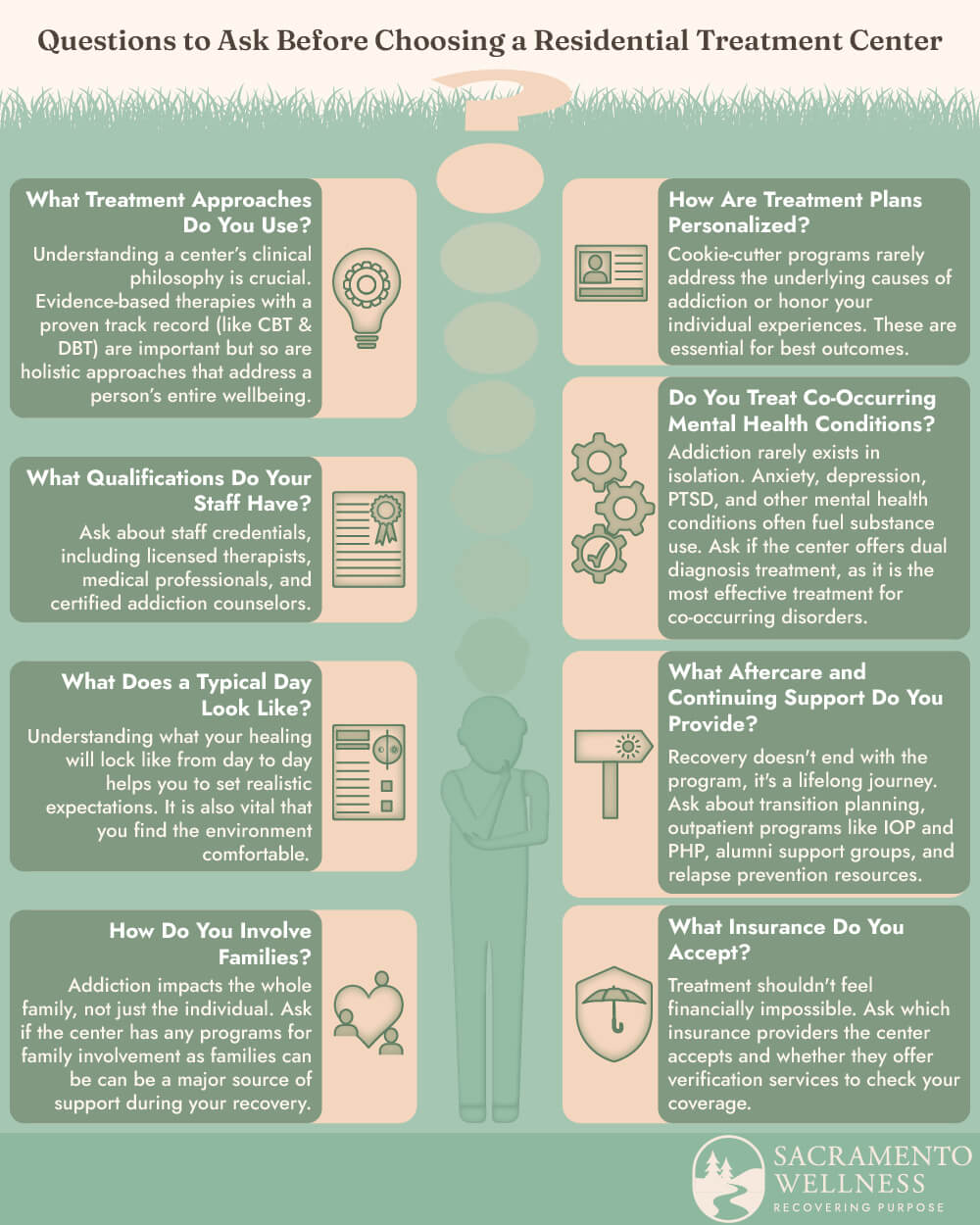
What Treatment Approaches Do You Use?
Understanding a center’s clinical philosophy matters deeply. Evidence-based therapies like Cognitive Behavioral Therapy (CBT), Dialectical Behavior Therapy (DBT), and trauma-informed care have proven effectiveness. But recovery isn’t just about clinical methods; it’s about addressing the roots of addiction with compassion and understanding.
Ask whether the program includes holistic approaches like mindfulness, yoga, or fitness activities alongside traditional therapy. A treatment center in Sacramento that treats the whole person, physically, mentally, and emotionally, offers the foundation for sustainable, lasting recovery.
How Are Treatment Plans Personalized?
Your story is unique, and your treatment should be too. Cookie-cutter programs rarely address the underlying causes of addiction or honor your individual experiences. Ask how the center develops individualized plans and whether they adjust treatment based on your progress and evolving needs.
The best rehab Sacramento programs recognize that healing happens differently for everyone. Personalized care means honoring your experiences, trauma history, co-occurring conditions, and personal goals for the life you want to build.
What Qualifications Do Your Staff Have?
The people guiding your recovery should inspire both confidence and trust. Ask about staff credentials, including licensed therapists, medical professionals, and certified addiction counselors. Equally important: Do they approach treatment with warmth, respect, and no judgment?
Recovery requires vulnerability and courage. You deserve a team that combines clinical expertise with genuine compassion, professionals who see you as a whole person, not a diagnosis or case number.
Do You Treat Co-Occurring Mental Health Conditions?
Addiction rarely exists in isolation. Anxiety, depression, PTSD, and other mental health conditions often fuel substance use. Ask whether the center offers dual diagnosis treatment for co-occurring disorders.
Treating both addiction and underlying mental health issues simultaneously creates a stronger, more stable foundation for lasting recovery. Without addressing root causes, the symptoms and struggles may return once you leave treatment.
What Does a Typical Day Look Like?
Understanding daily structure helps set realistic expectations and shows you what healing will look like day-to-day. Ask about therapy schedules, group sessions, recreational activities, mealtimes, and personal time. A balanced program includes clinical work, community connection, skill-building, and rest.
The environment matters too. Is the setting peaceful and comfortable? Does it feel like a place where healing can genuinely happen? Your surroundings significantly impact your ability to focus on recovery and feel safe enough to do the deep work ahead.
What Aftercare and Continuing Support Do You Provide?
Recovery doesn’t end when residential treatment does; it’s a lifelong journey. Ask about transition planning, outpatient programs like IOP and PHP, alumni support groups, and relapse prevention resources.
Centers committed to your long-term success provide clear pathways forward, whether through step-down programs or ongoing therapeutic support. Sustainable recovery requires continued connection and care.
How Do You Involve Families?
Addiction impacts entire families, not just individuals. Ask whether the program offers family therapy, education sessions, or support groups for loved ones. Healing often requires rebuilding trust, improving communication, and helping everyone understand their role in recovery.
Family involvement can strengthen your support system and help everyone understand the recovery journey together, creating a healthier foundation when you return home.
What Insurance Do You Accept?
Treatment shouldn’t feel financially impossible. Ask which insurance providers the center accepts and whether they offer verification services to check your coverage. Understanding your financial options removes one significant barrier between you and the healing you deserve.
Frequently Asked Questions
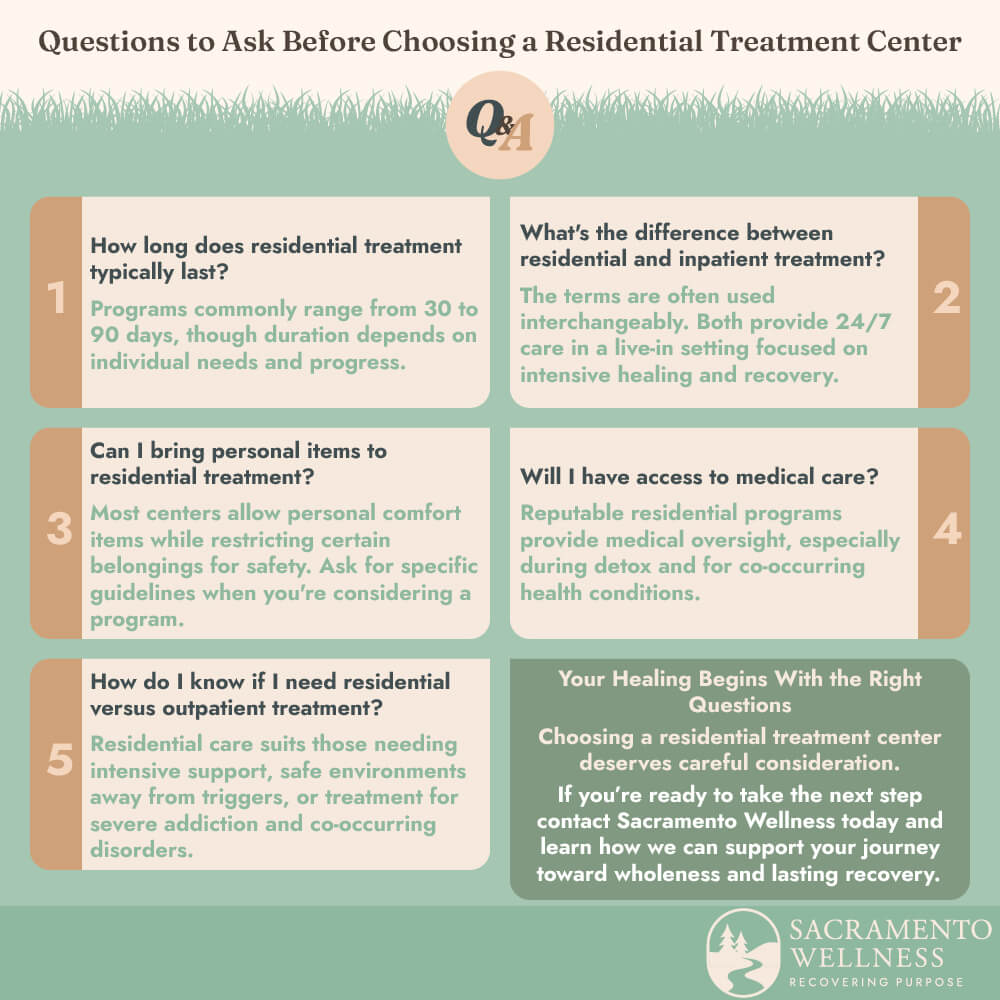
How long does residential treatment typically last?
Programs commonly range from 30 to 90 days, though duration depends on individual needs and progress.
What’s the difference between residential and inpatient treatment?
The terms are often used interchangeably. Both provide 24/7 care in a live-in setting focused on intensive healing and recovery.
Can I bring personal items to residential treatment?
Most centers allow personal comfort items while restricting certain belongings for safety. Ask for specific guidelines when you’re considering a program.
Will I have access to medical care?
Reputable residential programs provide medical oversight, especially during detox and for co-occurring health conditions.
How do I know if I need residential versus outpatient treatment?
Residential care suits those needing intensive support, safe environments away from triggers, or treatment for severe addiction and co-occurring disorders.
Your Healing Begins With the Right Questions
Choosing a residential treatment center in Sacramento is a courageous step that deserves careful consideration. You deserve care that honors your humanity, addresses your unique needs, and provides real hope for lasting change.
Ready to take the next step? Contact Sacramento Wellness today to learn how we can support your journey toward wholeness and lasting recovery.