


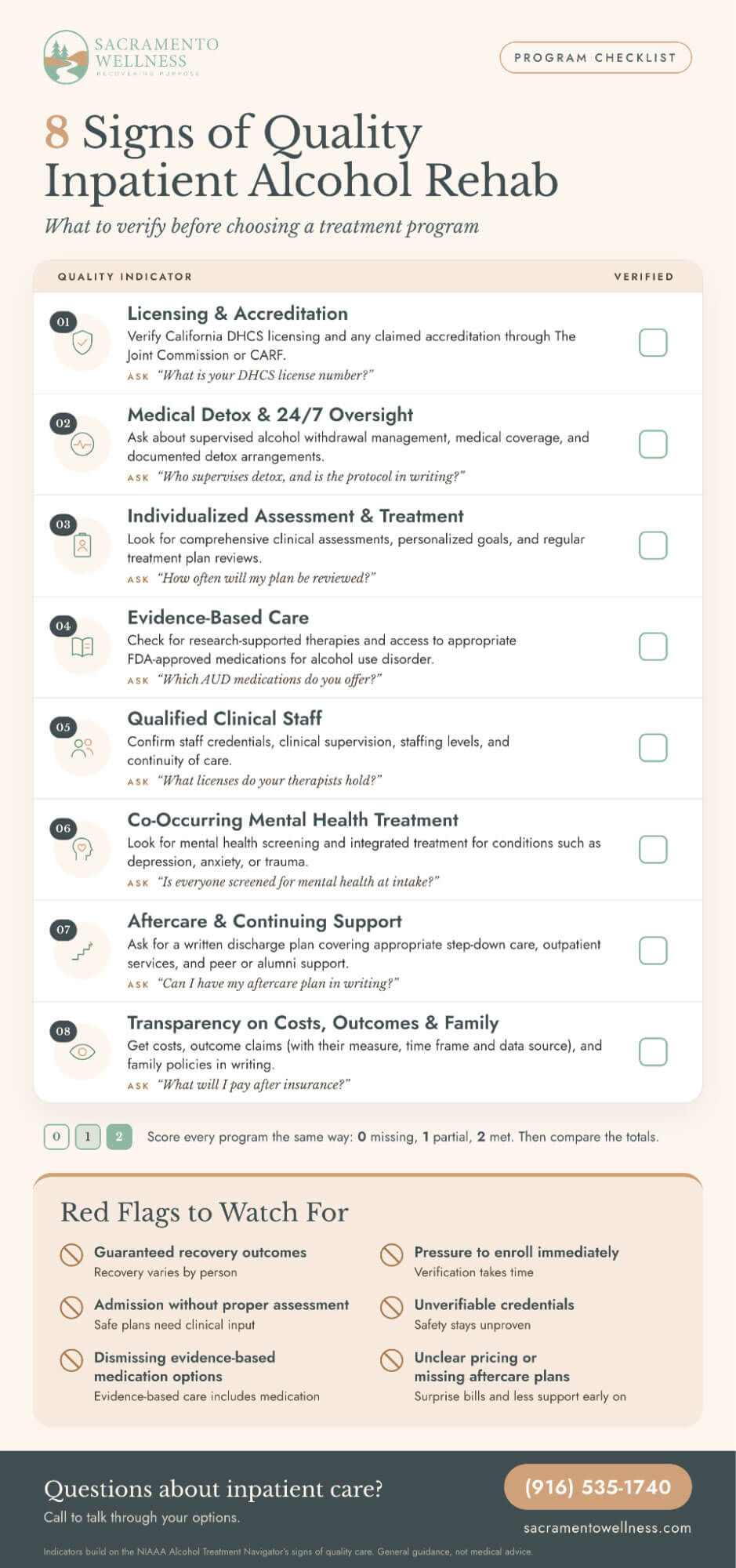
If you’re comparing inpatient alcohol rehab in Sacramento, you can judge quality with eight indicators. Core indicators include licensing and accreditation, medical detox, thorough assessment, evidence-based therapy and medication, qualified staff, and ongoing care. Each has a question to ask.
Recovery looks different for everyone, and honest programs will tell you that. The National Institute on Alcohol Abuse and Alcoholism (NIAAA) says that programs with more signs of quality care are more likely to provide better treatment. Check out each sign for yourself.
What Inpatient Alcohol Rehab Actually Includes
Inpatient rehab includes four core services:
- 24-Hour Care: Staff supports you day and night.
- Withdrawal Management: Supervised detox on-site or at a partner facility.
- Therapy: Relapse prevention skill-building.
- Medication Options: U.S. Food and Drug Administration (FDA)-approved medications for alcohol use disorder (AUD).
Residential care covers American Society of Addiction Medicine (ASAM) Levels 3.1 to 3.7. Hospital-based care is Level 4.
8 Key Indicators of Quality Inpatient Rehab
The NIAAA Alcohol Treatment Navigator lists five research-based signs that the eight indicators below expand on:
| Sign | What It Looks Like |
| 1. Credentials | License, accreditation, licensed clinicians |
| 2. Thorough Assessment | Full health review |
| 3. Customized Plan | Personal goals, updated over time |
| 4. Evidence-Based Treatment | Proven therapies and medications |
| 5. Continuing Support | Step-down care and alumni support |
1. Licensing and Accreditation
California’s Department of Health Care Services (DHCS) licenses residential alcohol and drug programs. Verify both:
- State License: Check the license number with DHCS.
- Accreditation: Confirm The Joint Commission or Commission on Accreditation of Rehabilitation Facilities (CARF) status.
Credentials you can verify matter more than marketing.
2. Medical Detox and 24/7 Oversight
Alcohol withdrawal can cause seizures and delirium tremens, making this the top indicator. Check for:
- Detox Access: Medical detox on-site or at a documented partner.
- 24/7 Coverage: An on-call physician or nurse using a withdrawal scale.
At Sacramento Wellness, we recommend asking for the withdrawal protocol in writing.
3. Assessment and Individual Plan
A licensed clinician should assess your substance use, health, and home life, often using ASAM criteria. Plans should include:
- Personal Goals: Your goals appear in writing.
- Regular Reviews: Staff updates the plan as you progress.
Find out how often your plan will be reviewed.
4. Evidence-Based Therapies and Medications
Quality programs use research-backed treatments, such as:
- Behavioral Therapies: Cognitive behavioral therapy (CBT), motivational enhancement therapy, contingency management, 12-step facilitation.
- FDA-Approved Medications: Naltrexone, acamprosate, and disulfiram.
You and your prescriber should decide together which medications are right for you.
5. Qualified Staff and Staffing Levels
Licensed professionals should lead care. Ask about:
- Clinical Team: Physicians, nurses, licensed therapists, and a medical director.
- Staffing Levels: Clinician-to-client ratios and staff turnover.
When staff teams are stable, you get more consistent care.
6. Co-Occurring Mental Health Care
Depression, anxiety, and trauma often accompany AUD. Look for:
- Intake Screening: Mental health checks for every resident.
- Integrated Care: On-site psychiatric treatment, with any dual diagnosis in your plan.
Treating mental health and addiction together helps your recovery.
7. Aftercare and Continuing Support
Quality programs plan discharge early. Ask about:
- Step-Down Care: Partial hospitalization program (PHP), intensive outpatient program (IOP), or outpatient care.
- Ongoing Connection: Alumni and peer support groups.
Ask for a written copy of your aftercare plan.
8. Transparency: Costs, Outcomes and Family Policies
Quality programs put costs, outcomes, and family rules in writing:
- Honest Outcomes: Success rates that name the measure, time frame, and data source.
- Family Policies: Visit, call, and privacy rules.
Getting answers in writing helps you make informed choices.
Red Flags: When to Walk Away
Watch for these warning signs:
| Red Flag | Why It Matters |
| Guaranteed results | Recovery varies by person |
| Admission before assessment | Safe plans need clinical input |
| Same-day pressure | Verification takes time |
| Unverified credentials | Safety stays unproven |
| Dismissing medication | Evidence-based care includes it |
| Vague pricing | Surprise bills follow |
| Missing aftercare plan | Early recovery needs support |
If you notice any warning signs, take a moment to check them out before moving forward.
Costs and Insurance in California
Sacramento County Medi-Cal members reach residential care through the Drug Medi-Cal Organized Delivery System (DMC-ODS), which requires a county assessment and authorization. When you compare inpatient alcohol rehab Sacramento programs, request in writing:
- Benefits: Covered services and approved days.
- Total Estimate: Out-of-pocket costs beyond the daily rate.
- Extra Charges: Detox, lab, medication, and psychiatric fees.
At Sacramento Wellness, we suggest checking your benefits before you enroll.
Staying Local vs Going Away
Staying in Sacramento keeps family close for visits and family therapy. It also lets you continue aftercare, outpatient sessions, and support groups near home. Medi-Cal and county-funded care generally runs through your county of residence, which can favor local programs.
Going away can help you avoid daily triggers and familiar drinking spots. But it may mean extra travel costs, less family involvement, and a longer transition to local aftercare. Let your clinical assessment help you decide.
Questions to Ask and Scorecard
Ask these NIAAA-based questions:
- Who supervises detox?
- Which AUD medications do you offer?
- What licenses do your therapists hold?
- What will I pay after insurance?
- What is your family policy?
Then score each verified indicator 0 (missing), 1 (partial), or 2 (met):
| Indicator | Program A | Program B | Program C |
| 1. Credentials | |||
| 2. Detox and oversight | |||
| 3. Assessment | |||
| 4. Evidence-based care | |||
| 5. Staff | |||
| 6. Mental health care | |||
| 7. Aftercare | |||
| 8. Transparency | |||
| Total (of 16) |
Add up your scores and compare them.
Start Your Recovery Today
Quality inpatient alcohol rehab is based on facts you can check. Begin with the five NIAAA signs, then look at all eight indicators, including licensing, medical detox, aftercare, and clear costs. Stay away from programs that promise results or pressure you to decide quickly.
Ask each program the same questions and write down their answers. Use your scorecard to compare them side by side. Taking time to compare now will help you find care that fits your health needs, recovery goals, and family situation.
FAQs
How long does inpatient alcohol rehab last?
Stays commonly last 28 to 90 days, including detox, followed by step-down care.
Is medical detox necessary for alcohol?
Heavy, long-term drinkers often need it because withdrawal can be dangerous. A clinician should decide.
Does insurance cover inpatient alcohol rehab?
Many plans, including Medi-Cal, cover it if medically necessary.
How does inpatient differ from outpatient rehab?
Inpatient rehab offers 24-hour on-site care, while outpatient rehab offers sessions from home.
How can I verify a rehab’s accreditation?
Confirm credentials directly with DHCS, The Joint Commission, or CARF.
Can I work during inpatient rehab?
Most people take leave, which the Family and Medical Leave Act (FMLA) may protect.