


Starting inpatient treatment can feel unfamiliar, but knowing what happens during intake can make the process easier to navigate. Inpatient drug rehab intake in Sacramento typically includes a medical evaluation, psychological assessment, consent paperwork, and a personalized treatment plan. These steps help the team learn about your health, past treatment, and what you need for recovery. Intake usually happens on your first day, and treatment starts after orientation and planning. Knowing what to expect at each step can help you feel ready and confident.
What Is Inpatient Drug Rehab and Who Is It For?
Inpatient drug rehab means staying at a treatment center full-time if you have a substance use disorder. You live at the facility and get medical and clinical support in a structured setting designed for recovery.
This type of care is often best for people with severe or long-term substance use issues, those who need more help than outpatient care offers, people with mental health conditions, or anyone coming from an unsafe home. During intake, a clinical assessment helps decide if inpatient treatment is the right choice.
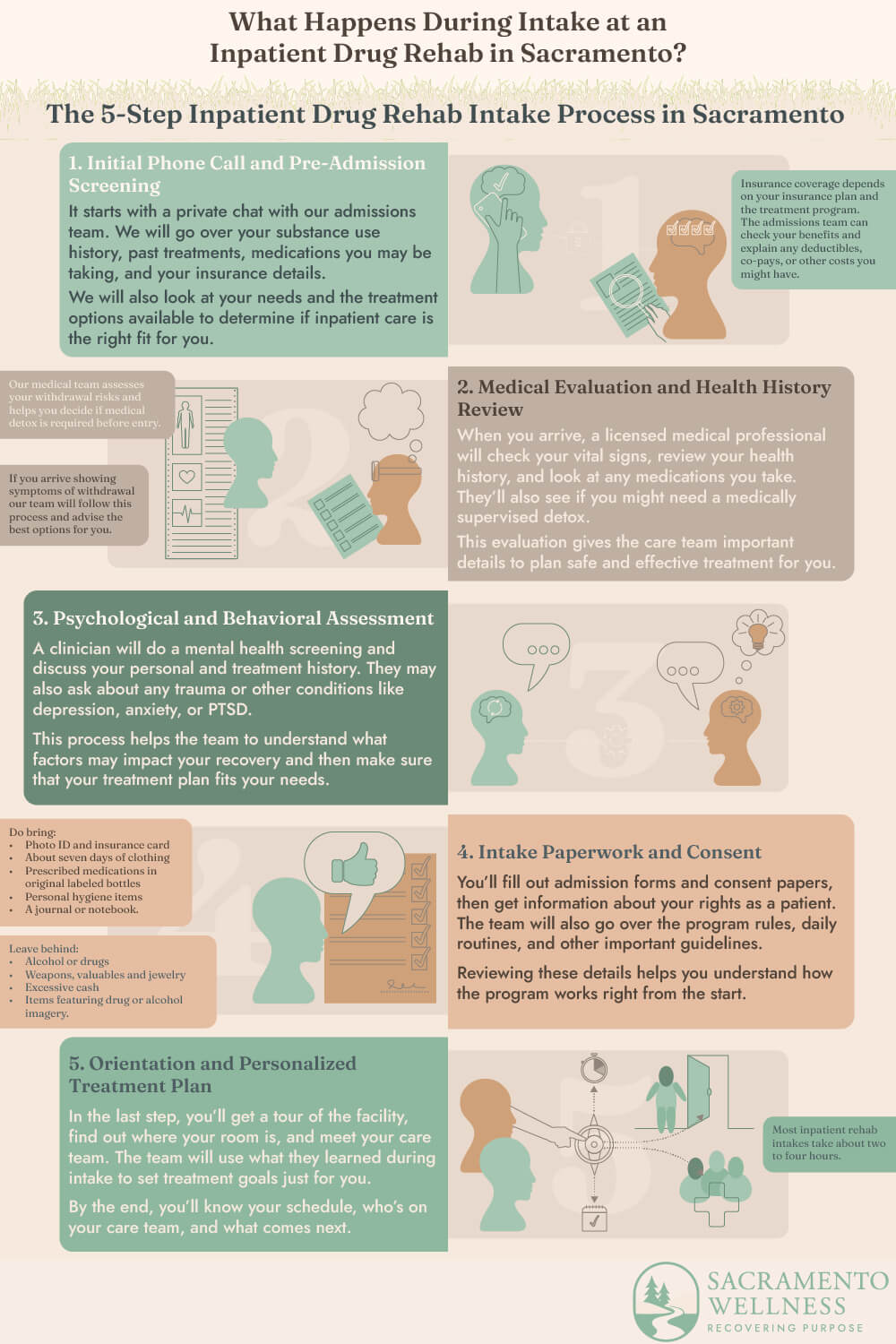
The 5-Step Inpatient Drug Rehab Intake Process in Sacramento
Most inpatient programs in Sacramento finish intake on your first day. It usually takes between two and four hours, but the exact time can depend on the facility and your needs.
1. Initial Phone Call and Pre-Admission Screening
It all starts with a private talk with the admissions team. You’ll go over your history with substance use, any medications you take, past treatments, and your insurance details.
The team will also look at your needs and the treatment options available to see if inpatient care is the right fit for you.
2. Medical Evaluation and Health History Review
When you arrive, a licensed medical professional will check your vital signs, review your health history, and look at any medications you take. They’ll also see if you might need a medically supervised detox.
This evaluation gives the care team important details to plan safe and effective treatment for you.
3. Psychological and Behavioral Assessment
A clinician will do a mental health screening and talk with you about your personal and treatment history. They may also ask about any trauma or other conditions like depression, anxiety, or PTSD.
These findings help the team understand what might affect your recovery and make sure your treatment plan fits your needs.
4. Intake Paperwork and Consent
You’ll fill out admission forms and consent papers, then get information about your rights as a patient. The team will also go over the program rules, daily routines, and other important guidelines.
Reviewing these details helps you understand how the program works right from the start.
5. Orientation and Personalized Treatment Plan
In the last step, you’ll get a tour of the facility, find out where your room is, and meet your care team. The team will use what they learned during intake to set treatment goals just for you.
By the end, you’ll know your schedule, who’s on your care team, and what comes next.
Will I Need Medical Detox Before Inpatient Treatment?
Not everyone who starts inpatient rehab needs a separate detox. Whether you need detox depends on what substances you’ve used, how dependent your body is, and your overall health.
Alcohol, opioids, and benzodiazepines can cause serious withdrawal symptoms and might need medical supervision. Stimulants and cannabis can also lead to psychological withdrawal that could affect your treatment start.
If you’re not sure if you need detox, the medical team will check your withdrawal risk during intake and help decide what’s best for you.
What Happens After Intake?
Once intake and orientation are complete, treatment can begin. Depending on the program, therapy and recovery activities may include:
- Cognitive Behavioral Therapy (CBT)
- Dialectical Behavior Therapy (DBT)
- Medication-Assisted Treatment (MAT)
- Individual counseling
- Group therapy
- Family therapy
- Trauma-informed therapy
- 12-Step programming
- Yoga, mindfulness, and nutrition activities
- Relapse prevention planning
The mix of services depends on your program and what you need. At Sacramento Wellness, learning about your options can help you get ready for the support you’ll have during recovery.
What to Bring to Inpatient Rehab in Sacramento
Getting your things ready before you arrive can make the transition smoother. Most programs give you a packing list, so check the latest requirements before you come.
What to Bring
- Photo ID and insurance card
- About seven days of clothing
- Prescribed medications in original labeled bottles
- Personal hygiene items
- A journal or notebook
What to Leave Behind
- Alcohol or drugs
- Weapons
- Valuables and jewelry
- Excessive cash
- Items featuring drug or alcohol imagery
Rules about personal devices are different at each program. Some limit phone use for the first week or two, so be sure to check the policy before you arrive.
Insurance and Payment During Intake
Checking your insurance is usually part of getting ready for admission. The admissions team might look at your coverage, network status, any needed authorizations, deductibles, and co-pays.
Coverage depends on your insurance plan and the treatment program. Before you arrive, ask the admissions team and your insurance provider about your benefits and any costs you might need to pay.
Start Your Recovery Today
Inpatient drug rehab intake in Sacramento is a step-by-step process that helps the team understand your medical, psychological, and recovery needs. Each stage, from the first screening to orientation and planning, gets you ready for the next part of your care. Knowing what to bring, how insurance works, and what to expect after admission can make things smoother. If you’re thinking about treatment, Sacramento Wellness can help you start exploring your recovery options and plan your next steps.
Frequently Asked Questions
How long does inpatient rehab intake take?
Most inpatient rehab intakes take about two to four hours. The exact time depends on the facility, the assessments, and your needs. Many places offer same-day admission and treatment.
Can I keep my phone during inpatient rehab?
Phone rules are different at each facility. Some limit personal device use for the first week or two, while others let you use your phone under supervision. Check the policy before you arrive.
What happens if I arrive in withdrawal?
The medical team will check your withdrawal symptoms and risk during intake. If you need a medically supervised detox, they’ll start the right care for you based on your needs.
Does insurance cover inpatient rehab?
Coverage depends on your insurance plan and the treatment program. The admissions team can check your benefits and explain any deductibles, co-pays, or other costs you might have.