

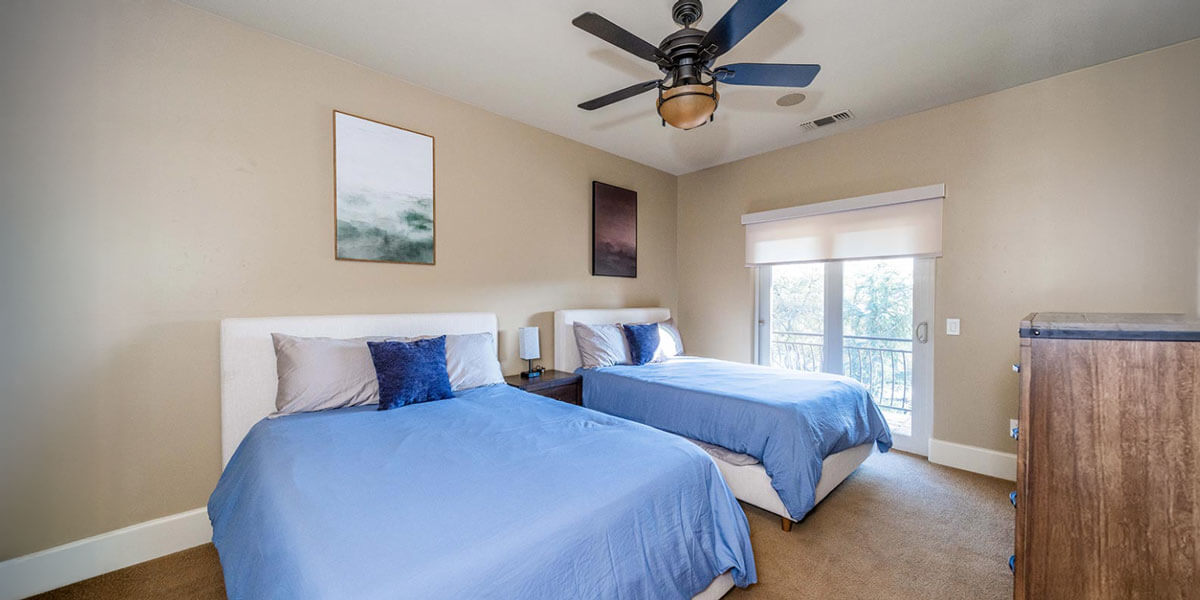
Choosing the right place to live during recovery matters for your comfort and peace of mind. Most residential centers offer two main options: private suites or shared rooms with a roommate. Each has its own benefits, giving you either more privacy or more chances to connect with others. Think about your budget, boundaries, and how much privacy you want to help you decide what works best for you. High-quality accommodations at a dedicated residential treatment center in Sacramento ensure every resident feels safe and fully supported throughout their stay.
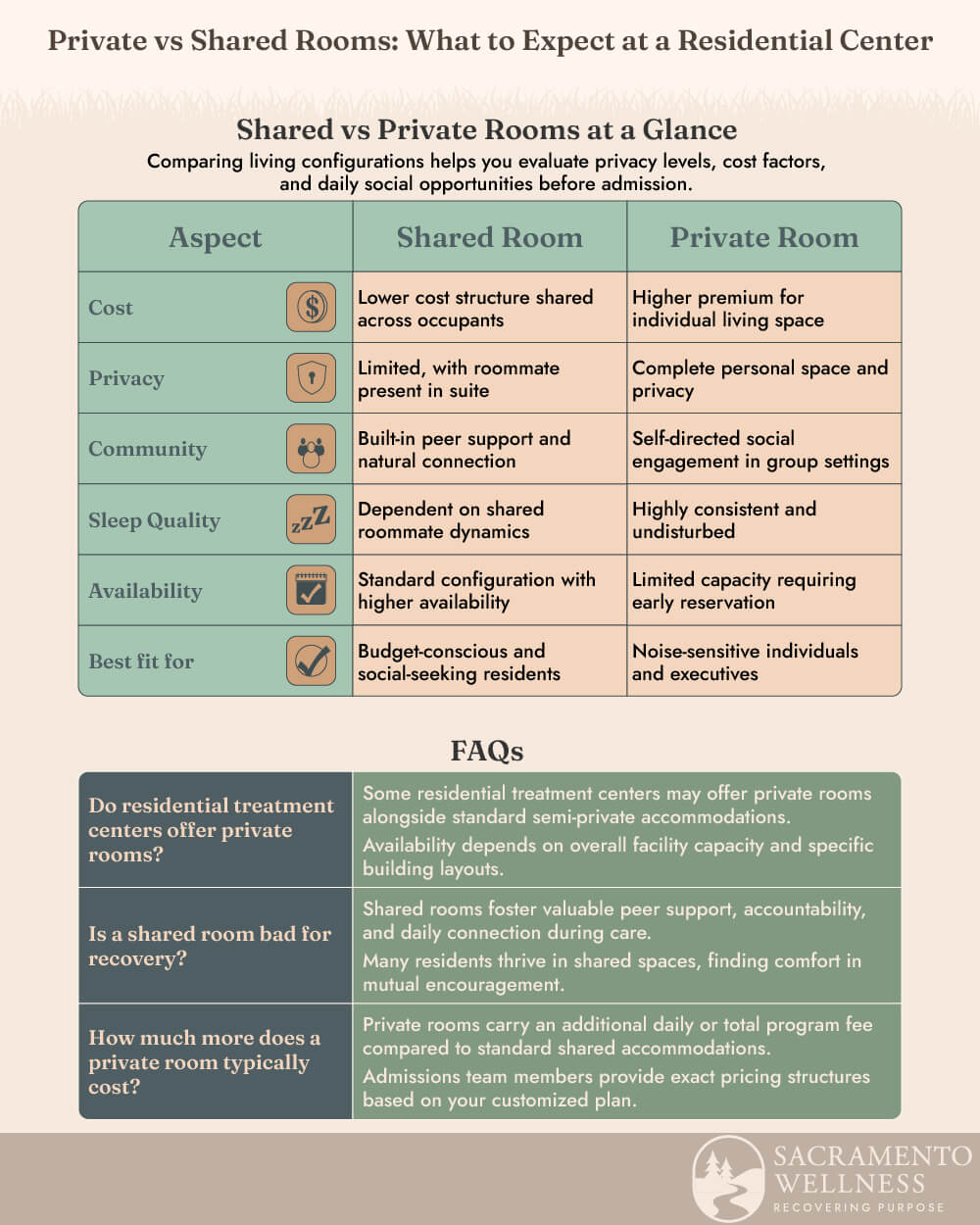
Why Room Type Matters in Residential Treatment
The type of room you choose affects your daily routine, how well you sleep, and your sense of privacy. A calm and comfortable space makes it easier to relax and think about what you learn each day. Facilities offer different room types so everyone can feel safe and comfortable.
Private rooms give you a quiet place to think, while shared rooms help you make friends and find support right away. Getting good sleep is important for your health and mood, so comfort should be a top priority when choosing your room.
Even though everyone follows the same care and therapy schedule, your room is your own space to rest and recharge. Good facilities keep rooms clean, welcoming, and supportive for each person. Picking a room that fits your personality can help you stay focused on your health goals.
What Shared Rooms Look Like at a Residential Treatment Center
Shared rooms are the most common option and usually pair two people in a roomy suite. These spaces are set up so each person has their own area, helping everyone feel comfortable and respected.
Standard inclusions in a shared suite feature:
- Dedicated twin beds and individual storage wardrobes for personal items.
- Shared en-suite or adjoining bathroom facilities maintained to high cleanliness standards.
- Access to communal lounge areas, outdoor patios and shared dining halls.
- Direct access to professional care staff around the clock.
Living with a roommate has both practical and social benefits. You can make friends easily, feel less alone, and save money on care. Sharing a room also helps you stay accountable and feel part of a community right from the start.
What Private Rooms Offer
Private rooms give you quiet time to think and help cut down on noise and distractions. Good centers offer private suites with their own bathrooms, so you have more space and privacy.
Getting enough sleep is important for your body and mind while you recover. Private rooms help you avoid being disturbed at night by a roommate’s schedule or snoring, so you can rest well.
Private rooms are a good choice for people with high anxiety, professionals who need quiet for work, or those with a history of trauma. However, they usually cost more and may not always be available.
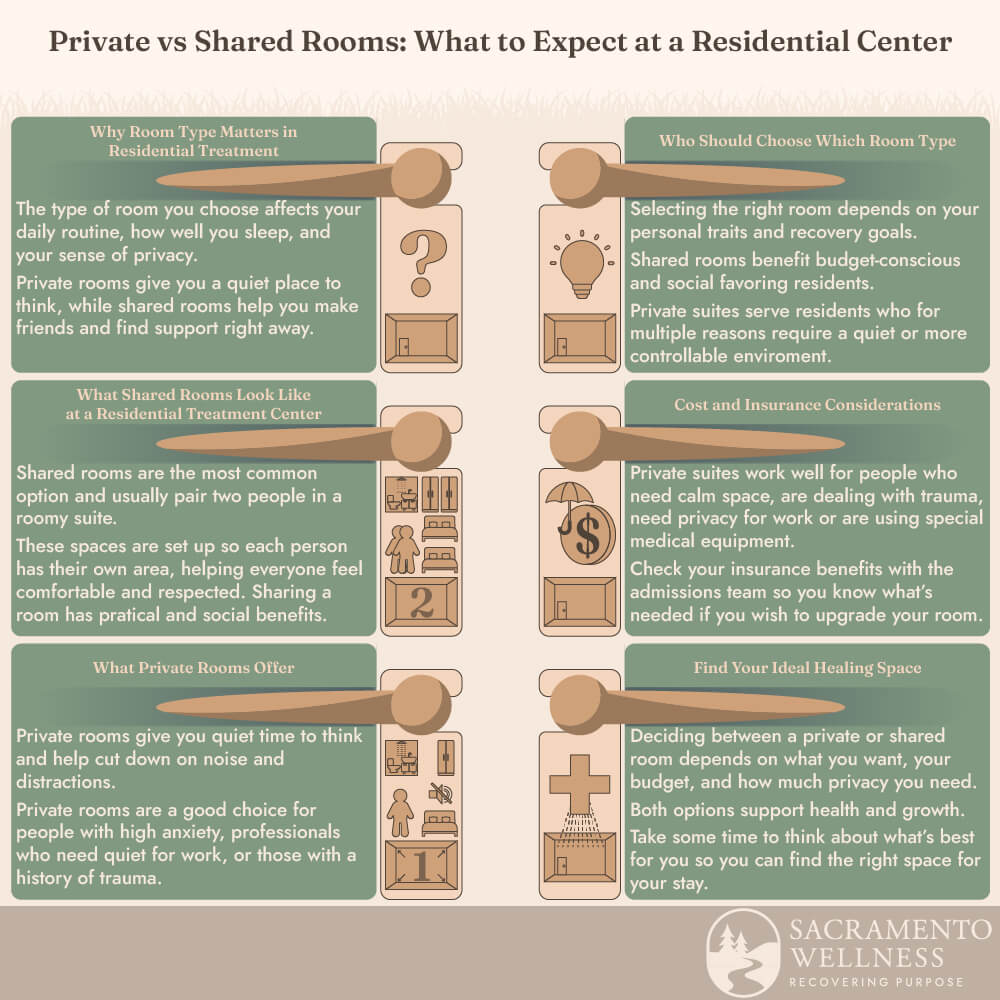
Shared vs Private Rooms at a Glance
Comparing living configurations helps you evaluate privacy levels, cost factors, and daily social opportunities before admission.
| Aspect | Shared Room | Private Room |
| Cost | Lower cost structure shared across occupants | Higher premium for individual living space |
| Privacy | Limited, with roommate present in suite | Complete personal space and privacy |
| Community | Built-in peer support and natural connection | Self-directed social engagement in group settings |
| Sleep Quality | Dependent on shared roommate dynamics | Highly consistent and undisturbed |
| Availability | Standard configuration with higher availability | Limited capacity requiring early reservation |
| Best Fit For | Budget-conscious and social-seeking residents | Noise-sensitive individuals and executives |
Who Should Choose Which Room Type
Selecting the right room depends on identifying personal traits and recovery goals. Shared rooms benefit budget-conscious residents, those seeking immediate peer encouragement, and first-time admissions who want consistent companionship. Sacramento Wellness helps evaluate personality and interpersonal goals to determine whether a private suite or shared room best supports your healing journey.
Private suites serve residents who require low-stimulus environments to manage stress. This layout fits individuals with complex trauma histories, public-facing professionals, or those utilizing specialized medical equipment. Personal needs guide placement, ensuring room choice enhances success without compromising safety.
Cost and Insurance Considerations
Private suites are best for people who need a calm space to manage stress. They work well for those with trauma, people who need privacy for work, or anyone using special medical equipment. Your personal needs help decide which room will help you succeed and stay safe.
Check your insurance benefits with the admissions team before you arrive. This way, you’ll know what’s covered, what you might need to pay, and if you can upgrade your room. Being prepared helps you plan and focus on your recovery.
Questions to Ask Before You Choose
Use this quick checklist during your admissions consultation:
- Is a private room available on my targeted admission date or is there a waiting list?
- Does my insurance plan cover private accommodations or does it cover semi-private suites only?
- What specific criteria and matching processes are used for roommate pairings?
- Does the room feature an en-suite bathroom or a shared hall facility?
- Can I request a room adjustment during my stay if my needs change?
- What are the guidelines regarding phone usage and visiting hours for each room type?
- Are quiet hours and noise policies strictly enforced in shared quarters?
- Is upgrading to a private room mid-treatment possible if space opens up?
Find Your Ideal Healing Space
Deciding between a private or shared room depends on what you want, your budget, and how much privacy you need. Shared rooms help you connect with others and save money, while private suites give you quiet and privacy. Both options support your health and growth. Take some time to think about what’s best for you so you can find the right space for your stay.
FAQs
Do residential treatment centers offer private rooms?
Some residential treatment centers may offer private rooms alongside standard semi-private accommodations. Availability depends on overall facility capacity and specific building layouts.
Is a shared room bad for recovery?
Shared rooms foster valuable peer support, accountability, and daily connection during care. Many residents thrive in shared spaces, finding comfort in mutual encouragement.
How much more does a private room typically cost?
Private rooms carry an additional daily or total program fee compared to standard shared accommodations. Admissions team members provide exact pricing structures based on your customized plan.