


Choosing MAT detox in Sacramento gives people a proven way to achieve lasting health and stability. Medication-assisted treatment uses safe, FDA-approved medications along with counseling and therapy to help balance brain chemistry, reduce dependence, and ease strong cravings. This approach is backed by research and helps people start recovery safely, making long-term healing possible.
What Is Medication-Assisted Treatment (MAT)?
According to SAMHSA, MAT uses FDA-approved medications together with counseling and therapy to treat substance use disorders as a whole-person approach. These treatments help balance brain chemistry, reduce strong cravings, and block the high from alcohol and opioids. Clinical teams use MAT mainly for three situations:
- Opioid Use Disorder (OUD): Safely addresses dependence on heroin, illicit fentanyl, and prescription pain medications.
- Alcohol Use Disorder (AUD): Uses targeted medications to curb intense cravings and reduce physical withdrawal risks.
- Benzodiazepine Dependence: Employs precise, medically monitored tapering protocols to prevent dangerous withdrawal complications.
To move past the stigma around medication support, it helps to understand how addiction medicine works today. Substance dependency is not a moral failing but a result of complex changes in the brain that medication can help treat.
FDA-Approved Medications Used in MAT Detox Sacramento Programs
There are several proven medications that can support each person’s unique needs during recovery.
| Medication | Type | Primary Use | How It Works |
| Buprenorphine (Suboxone/Subutex) | Partial opioid agonist | Opioid use disorder | Reduces cravings and withdrawal without full opioid effects |
| Methadone | Full opioid agonist | Opioid use disorder (severe) | Blocks opioid effects; dispensed daily at licensed clinics |
| Naltrexone (Vivitrol) | Opioid antagonist | Opioid + alcohol use disorder | Blocks opioid receptors; monthly injection available |
| Naloxone (Narcan) | Opioid antagonist | Emergency overdose reversal | Rapidly reverses opioid overdose |
| Acamprosate | GABA modulator | Alcohol use disorder | Reduces alcohol cravings post-detox |
| Disulfiram (Antabuse) | Aversion agent | Alcohol use disorder | Causes adverse reaction to alcohol consumption |
How MAT Detox Supports Long-Term Recovery
Medication-assisted care is meant to help people reach lasting wellness, not just provide short-term help. The FDA recommends staying on medication-assisted care for at least 12 months for opioid use disorder to greatly lower the risk of relapse.
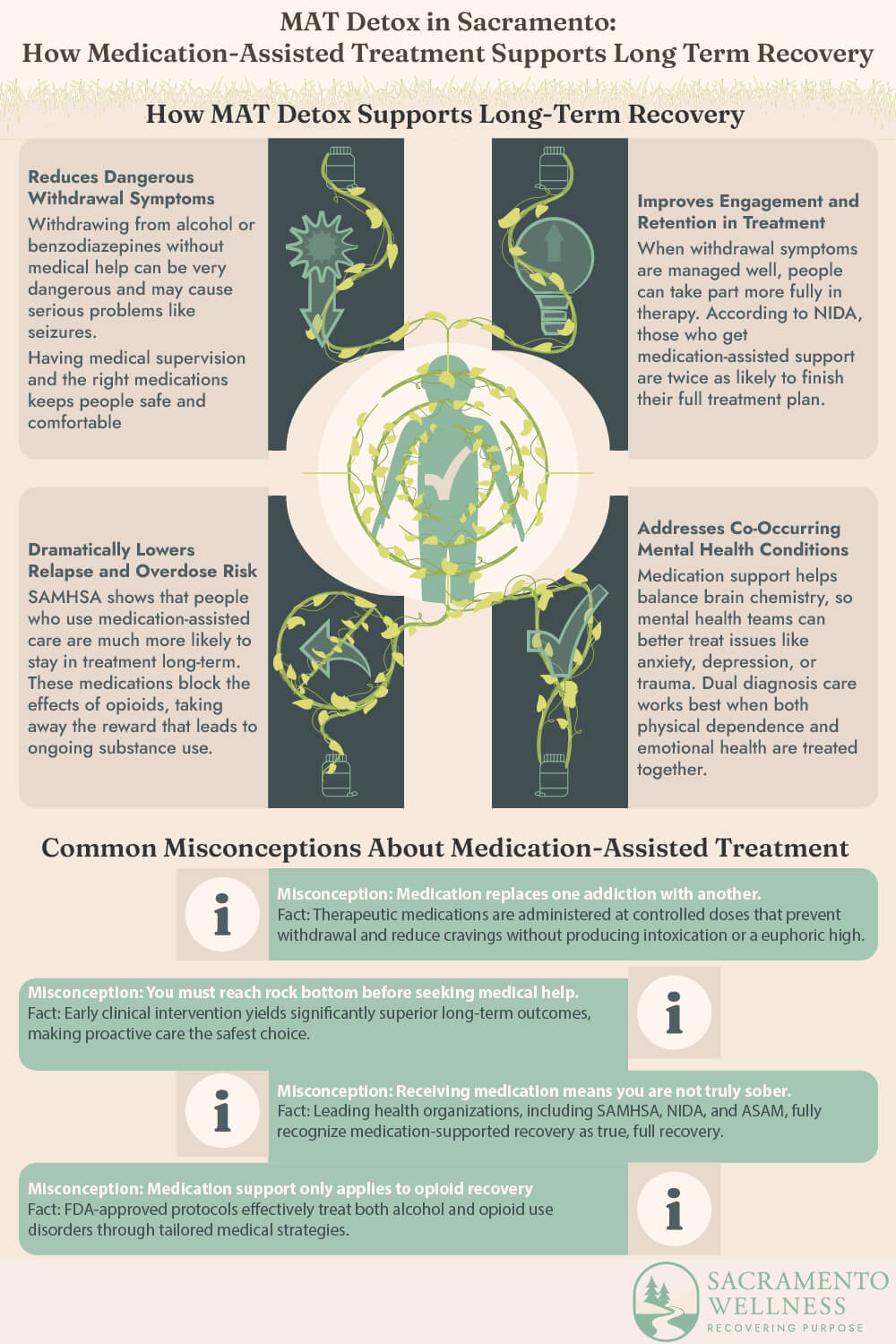
Reduces Dangerous Withdrawal Symptoms
Withdrawing from alcohol or benzodiazepines without medical help can be very dangerous and may cause serious problems like seizures. Having medical supervision and the right medications keeps people safe and comfortable. This makes withdrawal much more manageable and allows people to start therapy that can help them recover.
Dramatically Lowers Relapse and Overdose Risk
SAMHSA shows that people who use medication-assisted care are much more likely to stay in treatment long-term. These medications block the effects of opioids, taking away the reward that leads to ongoing substance use.
Improves Engagement and Retention in Treatment
When withdrawal symptoms are managed well, people can take part more fully in therapy. According to NIDA, those who get medication-assisted support are twice as likely to finish their full treatment plan.
Addresses Co-Occurring Mental Health Conditions
Medication support helps balance brain chemistry, so mental health teams can better treat issues like anxiety, depression, or trauma. Dual diagnosis care works best when both physical dependence and emotional health are treated together.
What to Expect During MAT Detox at Sacramento Wellness
Medical detox follows a clear, step-by-step process that focuses on safety, respect, and lasting recovery.
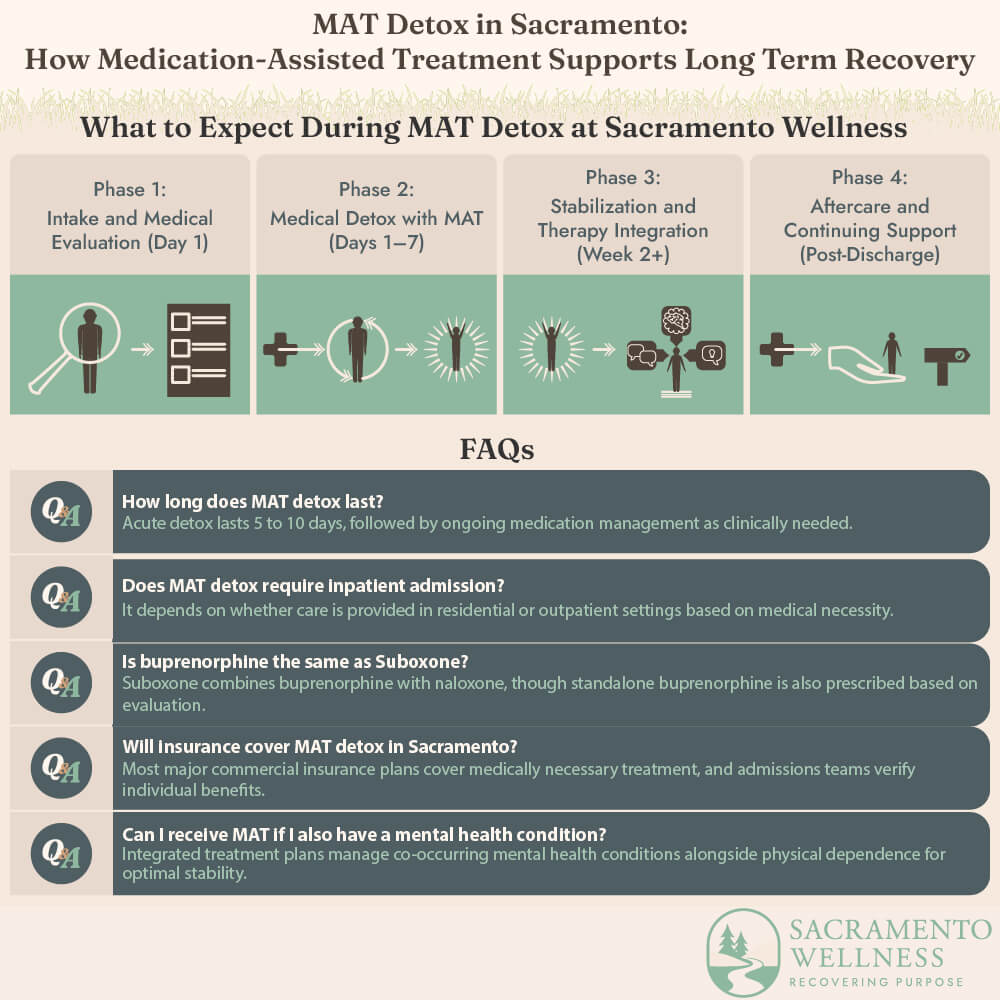
- Phase 1: Intake and Medical Evaluation (Day 1)
You will go through a full review of your medical history, an assessment of your substance use, and a check for withdrawal risks. You will also get a psychiatric evaluation for any mental health needs and have blood work done to set a baseline for your care. - Phase 2: Medical Detox with MAT (Days 1–7)
You will start on FDA-approved medication that fits your needs. Nurses will monitor you 24/7, check your vital signs, and adjust your medication as your symptoms change. - Phase 3: Stabilization and Therapy Integration (Week 2+)
Once you are physically stable, you will begin one-on-one counseling, cognitive behavioral therapy (CBT), and motivational interviewing. You will keep getting the right medication doses while joining group therapy sessions. - Phase 4: Aftercare and Continuing Support (Post-Discharge)
You will move smoothly to either residential or intensive outpatient care, continuing your medication support. A strong relapse prevention plan will be set up, including mental health care and a plan for slowly reducing medication if needed.
At Sacramento Wellness in El Dorado Hills, clients get 24/7 medical supervision in a comfortable home-like setting. Our center offers complete, medically monitored care to help each person build a solid foundation for long-term sobriety.
Common Misconceptions About Medication-Assisted Treatment
Learning the facts about medication support can clear up common myths and help people make informed choices about their care.
- Misconception: Medication replaces one addiction with another.
Fact: Therapeutic medications are administered at controlled doses that prevent withdrawal and reduce cravings without producing intoxication or a euphoric high. - Misconception: You must reach rock bottom before seeking medical help.
Fact: Early clinical intervention yields significantly superior long-term outcomes, making proactive care the safest choice. - Misconception: Receiving medication means you are not truly sober.
Fact: Leading health organizations, including SAMHSA, NIDA, and ASAM, fully recognize medication-supported recovery as true, full recovery. - Misconception: Medication support only applies to opioid recovery.
Fact: FDA-approved protocols effectively treat both alcohol and opioid use disorders through tailored medical strategies.
Who Is a Good Candidate for Medication-Assisted Detox?
Choosing the best treatment plan should be done with help from qualified medical professionals. People who benefit most from this approach often have:
- Moderate to severe opioid use disorder involving heroin, fentanyl, or prescription medications.
- Alcohol dependence accompanied by a history of dangerous physical withdrawal symptoms.
- Multiple previous recovery attempts that experienced setbacks due to intense physiological cravings.
- Benzodiazepine dependence requires a medical tapering protocol.
- Co-occurring mental health conditions requiring chemical stabilization to participate fully in therapy.
Take the First Step Toward Lasting Recovery
Medication-assisted care gives people a proven way to turn physical stability into lasting recovery. By easing tough withdrawal symptoms and cravings, this approach lets people focus on healing emotionally and mentally.
Sacramento Wellness offers caring support in a safe place and accepts most major insurance plans to make treatment accessible. Taking the first step toward long-term health can bring lasting energy, confidence, and peace of mind.
FAQs
How long does MAT detox last?
Acute detox lasts 5 to 10 days, followed by ongoing medication management as clinically needed.
Does MAT detox require inpatient admission?
It depends on whether care is provided in residential or outpatient settings based on medical necessity.
Is buprenorphine the same as Suboxone?
Suboxone combines buprenorphine with naloxone, though standalone buprenorphine is also prescribed based on evaluation.
Will insurance cover MAT detox in Sacramento?
Most major commercial insurance plans cover medically necessary treatment, and admissions teams verify individual benefits.
Can I receive MAT if I also have a mental health condition?
Integrated treatment plans manage co-occurring mental health conditions alongside physical dependence for optimal stability.