

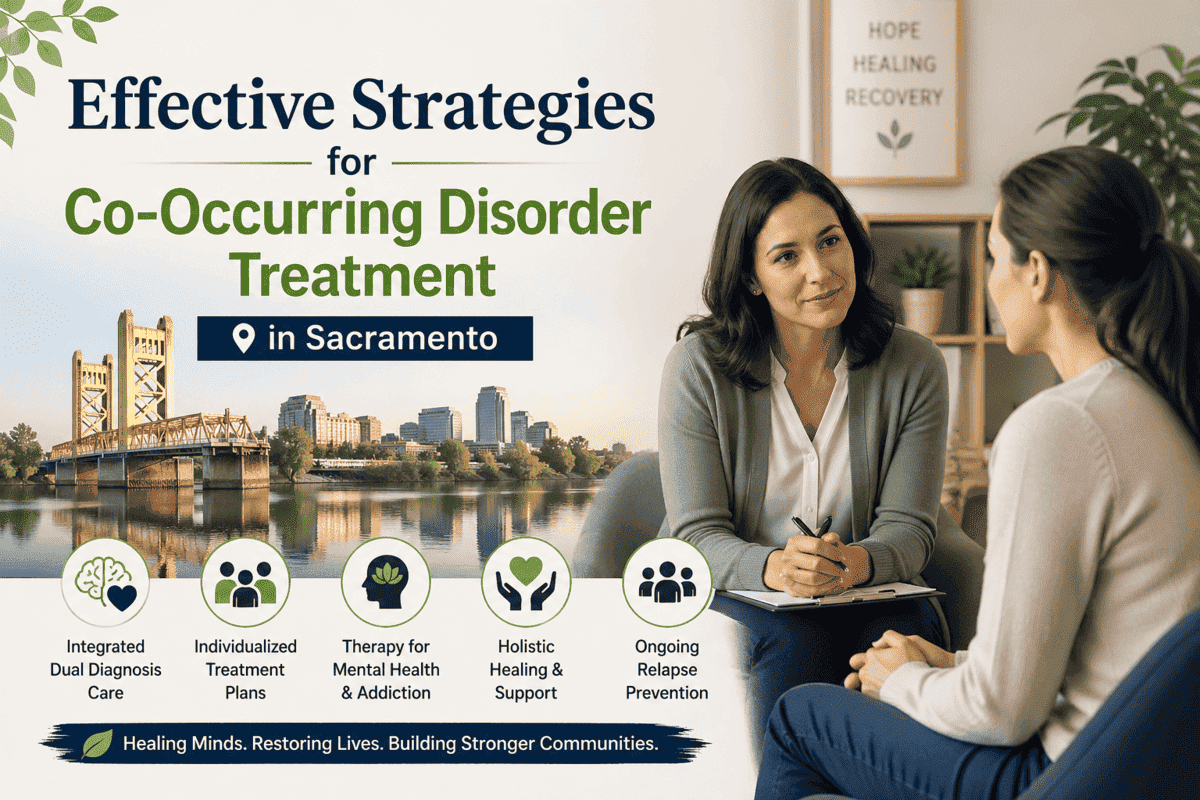
In 2024, about 21.2 million adults in the United States had both a mental illness and a substance use disorder. SAMHSA reports that 41.2% of these adults did not get any mental health or substance use treatment in the past year. This shows why co-occurring disorder treatment in Sacramento is so important. When both issues make each other worse, it’s essential to get help for both together.
You might notice anxiety, depression, trauma symptoms, or mood changes along with drinking or drug use. Alcohol or drugs can seem like a quick way to relieve stress, but they often make symptoms worse and cause more problems in daily life. Treatment should address both issues, not just one.
This blog explains why both problems need treatment together, which methods can help, what signs to watch for, and what co-occurring treatment usually includes in Sacramento.
What Is Co-Occurring Disorder Treatment?
Co-occurring disorder treatment helps when you have both a mental health disorder and a substance use disorder at the same time. You might be dealing with anxiety, depression, trauma symptoms, bipolar disorder, or another mental health issue along with alcohol or drug use. Both conditions need attention together.
This treatment focuses on your mental health and substance use at the same time. It begins by looking at your whole situation, not just one part. Your symptoms, substance use, and daily challenges are reviewed together so treatment matches what you’re actually facing.
Why Treating Both Conditions Together Matters
When you have both a mental health problem and a substance use problem, each can make the other worse. Anxiety, depression, trauma symptoms, or mood swings might lead you to drink or use drugs, and substance use can make those symptoms harder to handle. If only one problem is treated, the other can still cause trouble.
Treating both conditions together helps you understand what’s really happening. You get support for your mental health, your substance use, and how they affect each other. This way, your treatment fits your real needs and helps you build better coping skills while lowering the risk of relapse.
Effective Strategies Used in Co-Occurring Disorder Treatment
Co-occurring disorder treatment works best when mental health symptoms and substance use are addressed together. Most programs use several methods because both problems affect daily life differently. Treatment is more effective when it matches what you’re experiencing.
Full Screening and Assessment
Treatment usually starts with a full screening and assessment. Your team reviews your mental health symptoms, substance use, past care, and daily habits. This thorough review shows how the problems are connected and what support may work best for you.
Cognitive Behavioral Therapy
Cognitive behavioral therapy (CBT) helps you recognize thoughts and habits connected to substance use and mental health symptoms. You learn how stress, triggers, and thinking patterns affect your actions, and you practice safer ways to respond in real situations.
Dialectical Behavior Therapy
Dialectical behavior therapy (DBT) helps you manage strong emotions like mood swings, stress, impulsive choices, and relationship struggles. You learn to slow down your reactions, stay calm, and handle pressure better.
Motivational Interviewing
Motivational interviewing helps when you’re unsure about making changes. You might want things to get better, but old habits can hold you back. This approach helps you talk through your thoughts and find your own reasons to move forward.
Trauma-Informed Therapy
Trauma-informed therapy considers how past experiences can still affect your emotions and behavior. Many people in co-occurring treatment have a history of trauma, so this therapy focuses on safety, trust, and steady progress as you work through those effects.
Relapse Prevention
Relapse prevention helps you get ready for real-life situations by teaching you to spot triggers, manage cravings, and respond early when stress or symptoms build up. In Sacramento, programs like Sacramento Wellness often include relapse planning as part of ongoing support after the first stage of treatment.

Common Signs You Need Co-Occurring Disorder Treatment
Mental health symptoms and substance use don’t always look the same for everyone. Often, the pattern develops over time. When both problems start to affect your mood, sleep, behavior, daily tasks, or relationships, co-occurring disorder treatment may be needed.
- Substances become a way to cope: Drinking or drug use may start to feel tied to stress, fear, sadness, or emotional pain. Over time, coping can turn into dependence.
- Symptoms get worse after using: Short‑term relief may be followed by more anxiety, lower mood, stronger cravings, or bigger emotional swings. Repeated ups and downs can point to both problems happening together.
- Mental health symptoms stay after stopping: A break from alcohol or drugs doesn’t always make emotional symptoms go away. Panic, depression, fear, or mood changes may still remain.
- Daily life starts to slip: Work, school, chores, and routines can get harder to manage. You might lose focus, feel low on energy, and even small tasks can start to feel more difficult.
- Relapse keeps happening: Treatment for substance use may help for a while, but then stress or mental health symptoms pull you back into old patterns. Repeated relapse can signal a deeper issue.
- Relationships feel more strained: More conflict, more distance, or less trust at home can be a warning sign. Both mental health symptoms and substance use can affect how you react and connect.
- Control feels harder to keep: Cravings, strong emotions, and impulsive choices can start to take over daily life. If these patterns keep repeating, a more complete treatment might be the right next step.
What Co-Occurring Disorder Treatment Includes in Sacramento
Co-occurring disorder treatment in Sacramento usually includes several parts working together. The program is designed to address mental health symptoms, substance use, daily stability, and what comes after early treatment. The most important thing is having full support during treatment, not just the therapy method itself.
Intake and Treatment Planning
The first step is intake. Your team collects information about your symptoms, substance use, health history, and daily challenges. This information helps shape your treatment plan.
Psychiatric and Clinical Review
A closer review helps the team decide what needs attention first. They look at your mental health symptoms, substance use patterns, risk level, and past treatment history together.
Individual Therapy
Individual sessions give you a chance to talk about personal struggles, triggers, behavior patterns, and progress. This part of treatment helps connect your real life with what you’re working on in therapy.
Group Support
Group sessions offer shared support and structure. You can hear how others handle similar problems, practice recovery skills, and stay involved in treatment through regular discussions.
Medication Support
Medication support can be included in treatment when needed. It can help with withdrawal, cravings, mood symptoms, sleep problems, or other issues that affect recovery.
Daily Structure
A steady routine is important in many programs. Your day might include therapy, check-ins, meals, recovery work, and time focused on stability and progress.
Family Support
Some treatment plans involve family to improve communication, reduce conflict, and make home life more supportive during recovery.
Next-Step Planning
Treatment should also get you ready for what comes after the first phase of care. The next step might include outpatient treatment, continued therapy, or another level of support, depending on your progress.
How to Tell if a Sacramento Program Is Built for Co-Occurring Care
Not every Sacramento treatment program is designed to treat mental health symptoms and substance use together. Some focus more on addiction, while others focus on mental health. When both problems are present, the program should address both from the beginning.
- Both problems are part of treatment: A real co‑occurring care program doesn’t treat one problem and ignore the other. Mental health symptoms and substance use should both be part of the treatment work.
- Intake looks at the full picture: The first review should cover more than just drug or alcohol use. It should also look at symptoms, past treatment, health history, and daily struggles.
- The treatment plan is not split in half: The plan should connect both sides of the problem. Your symptoms, triggers, substance use, and daily needs should all be part of it.
- The team knows dual diagnosis care: Staff should understand how mental health disorders and substance use disorders affect each other, especially when symptoms change, stress rises, or relapse risk grows.
- Therapy matches both issues: Therapy should help with recovery and mental health at the same time, not feel like two separate tracks with no connection.
- Medication support can be part of care: Some people need medication during treatment. The program should be able to review symptoms, track progress, and include medication support when needed.
- Progress is checked along the way: Needs can change during treatment. A good program keeps track of symptoms, progress, and setbacks so support can adjust as needed.
- There is a plan for what comes next: The first stage of treatment is not the end of recovery. A Sacramento program for co-occurring care should also help you plan for outpatient support, ongoing therapy, or the next level of help.
Get Help for Co-Occurring Disorders in Sacramento
When mental health symptoms and substance use keep affecting each other, the problem can grow faster than you expect. Getting help for both at the same time can make a real difference. The right support can help you understand what’s happening, reduce daily stress, and start to regain control.
If you’re looking for co-occurring disorder treatment in Sacramento, Sacramento Wellness offers support for both mental health and substance use in one place. Reach out, ask questions about your situation, and find out which treatment might fit your needs best. Taking the first step now can help you break the pattern and move toward a more stable path.