

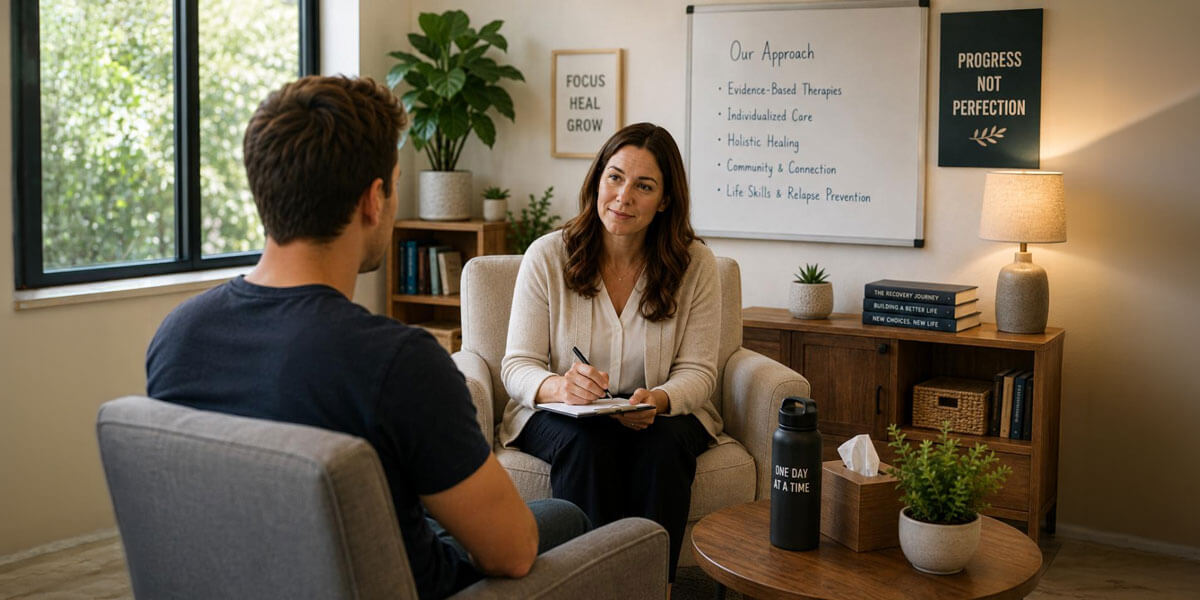
Having a structured daily routine provides essential stability during recovery, helping individuals replace unpredictable environments with clear, supportive care. A complete residential treatment schedule includes therapy sessions, healthy meals, group activities, and time for quiet reflection. When people know what to expect each hour, it lowers stress, supports emotional balance, and helps build healthy habits for life. These routines make it easier to focus on health and emotional stability while working toward long-term recovery.
Why Structure Matters in Residential Treatment
Accredited treatment centers use planned daily schedules to help people move safely through the early stages of recovery.
- Eliminating Uncertainty: Predictable routines take away daily guesswork and replace past chaos with a steady, reassuring structure.
- Reducing Stress and Anxiety: When people know what will happen each day, it helps lower stress and ease early anxiety.
- Fostering Focus on Healing: Clear schedules help people save mental energy so they can focus on personal reflection and building new skills.
- Restoring Physical Health: Regular times for activities, meals, and sleep help people get back to healthy routines and feel better physically.
- Building Long-Term Habits: Taking part in daily activities helps people rebuild discipline, boost self-esteem, and create lasting habits.
A structured daily schedule makes sure everyone gets steady, balanced care all day, which supports long-term wellness.
A Sample Daily Schedule, Morning to Night
A typical day in rehab has a set routine that helps people make progress without feeling overwhelmed or tired.
| Time Block | Typical Activity |
| 6:30–7:30 AM | Wake-up, wellness check, morning meditation or exercise |
| 7:30–8:30 AM | Breakfast and morning medications as prescribed |
| 8:30–11:30 AM | Group therapy, education or life skills groups |
| 11:30 AM–1:00 PM | Lunch and mid-day rest period |
| 1:00–4:00 PM | Individual counseling and specialized sessions |
| 4:00–6:00 PM | Recreational activities, holistic therapy or free time |
| 6:00 PM–Bedtime | Dinner, peer support meetings, reflection and quiet hours |
Types of Therapy Sessions Included in the Day
A thorough daily schedule residential treatment program incorporates several distinct therapy types to address recovery from multiple angles:
- Individual Counseling: One-on-one sessions with a counselor focus on personal history, emotional growth, and recovery goals. These private meetings give people a chance to work through their own challenges.
- Group Therapy: Group sessions encourage open conversation, shared learning, and building empathy and social skills. Being part of a group helps people feel less alone and learn healthy boundaries.
- Educational Workshops: Classes teach practical ways to prevent relapse, manage emotions, use coping tools, and stay healthy. These sessions give people useful knowledge to help them stay on track each day.
- Experiential and Recreational Therapy: Activities like art, movement, mindfulness, or outdoor fun add to regular counseling. These sessions help people express emotions in healthy ways and find creative ways to handle stress.
Using proven methods like Cognitive Behavioral Therapy in daily sessions helps people grow in a balanced way.
How the Schedule Shifts by Treatment Phase
Daily routines change as people move through different stages of recovery, helping them become more independent and healthy over time. These gradual shifts in structure allow each person to build confidence and practice new skills as they progress:
- Early Stabilization Phase: This first phase centers on health assessments, physical adjustment, and ongoing medical supervision. Daily routines are closely watched to keep people safe, well-rested, well-nourished, and mentally grounded. Frequent check-ins and gentle structure provide a sense of security and help individuals settle into treatment.
- Mid-Stage Growth Phase: In this middle phase, people practice new ways to communicate, solve problems, and use coping tools. The program encourages them to take more responsibility, manage their time, and get more involved in group activities. Increased autonomy and participation help residents develop self-reliance and a sense of accomplishment.
- Advanced Transition Phase: In the last phase, the focus is on getting involved in the community, preparing for work, rebuilding family ties, and planning for life after treatment. Daily routines include aftercare planning, meeting outside support groups, and getting ready for independent living. Supportive staff guidance during this phase helps residents maintain motivation, address challenges, and prepare for lasting success after discharge.
Program structures adjust gradually to match ongoing personal progress, making individuals transition smoothly through each distinct stage of care while building confidence for the future.
Weekend and Family Visit Schedule Differences
On weekends, the schedule at a Sacramento residential treatment center still offers support but at a slower pace. Saturdays and Sundays focus on reflection, self-care, group activities, and time to relax.
Therapy sessions continue on weekends, along with set visiting hours. Special weekend times let families visit and learn, helping residents rebuild strong personal connections.
Weekend routines give people more time for hobbies, reading, and group outings. Family sessions help loved ones learn how to create a healthy home. The slower weekend pace gives residents time to absorb what they learned during the week.
Start Your Healing Journey
A structured daily schedule is the foundation for lasting recovery, giving people stability when they need it most. Predictable routines help replace chaos with healthy habits and guide people toward emotional balance and wellness. At Sacramento Wellness, we plan each day carefully to create a steady, reassuring routine that eases early recovery anxiety. This approach helps people rebuild confidence, learn healthy coping skills, and get ready for long-term health. With a structured routine, recovery becomes more organized and manageable.
FAQs
What does a typical day look like in residential treatment?
A typical day includes morning wellness checks, group therapy, lunch, afternoon counseling, recreational activities, and evening support meetings.
How many hours of therapy happen per day in residential treatment?
Residents spend several hours each day in therapy, including individual sessions, group meetings, workshops, and wellness activities.
Is there free time built into the schedule?
Schedules have rest periods, mid-day breaks, open evenings, and flexible weekends to encourage relaxation and personal reflection.
Can family visit during residential treatment?
Facilities set visiting times, usually on weekends, along with family sessions that support recovery and help rebuild healthy relationships.