


When you’re in recovery, stress doesn’t always announce itself with a warning. It can arrive suddenly, a flash of anxiety, an unexpected craving, or the weight of a difficult moment pressing down on your chest. In those times, you need something immediate, something you can reach for without having to leave where you are or explain what you’re feeling.
Your breath is that tool. And learning to use it intentionally can become one of your most powerful allies in recovery.
Why Breathing Matters in Recovery
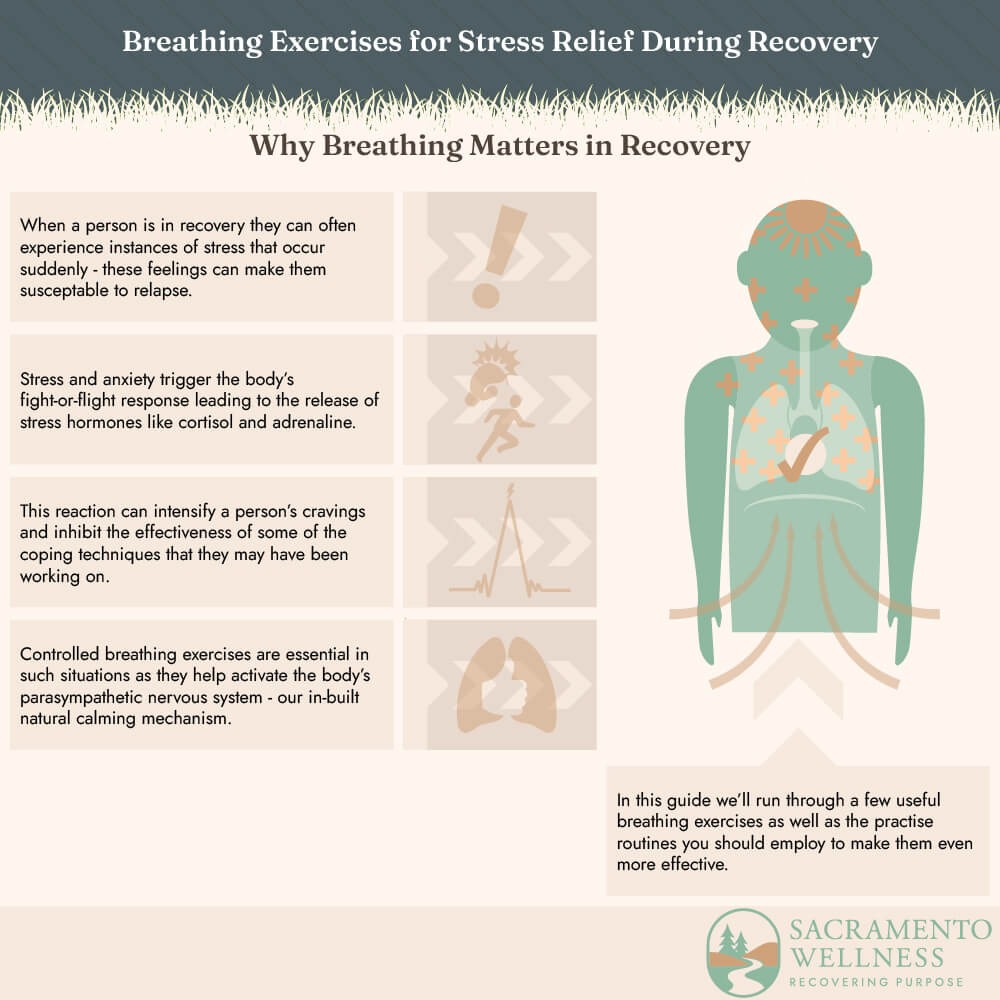
Stress and anxiety trigger your body’s fight-or-flight response, flooding your system with stress hormones like cortisol and adrenaline. For someone in recovery, this physiological state can intensify cravings and make it harder to access the coping skills you’ve been building. Controlled breathing exercises help activate your parasympathetic nervous system, your body’s natural calming mechanism, creating physical and emotional space between you and the urge to use.
At our residential treatment center in Sacramento, we incorporate breathwork alongside traditional therapies because we understand that healing isn’t just about addressing the mind; it’s about reconnecting with your body and learning to trust its signals again.
Simple Breathing Exercises You Can Use Anywhere
Box Breathing (4-4-4-4)
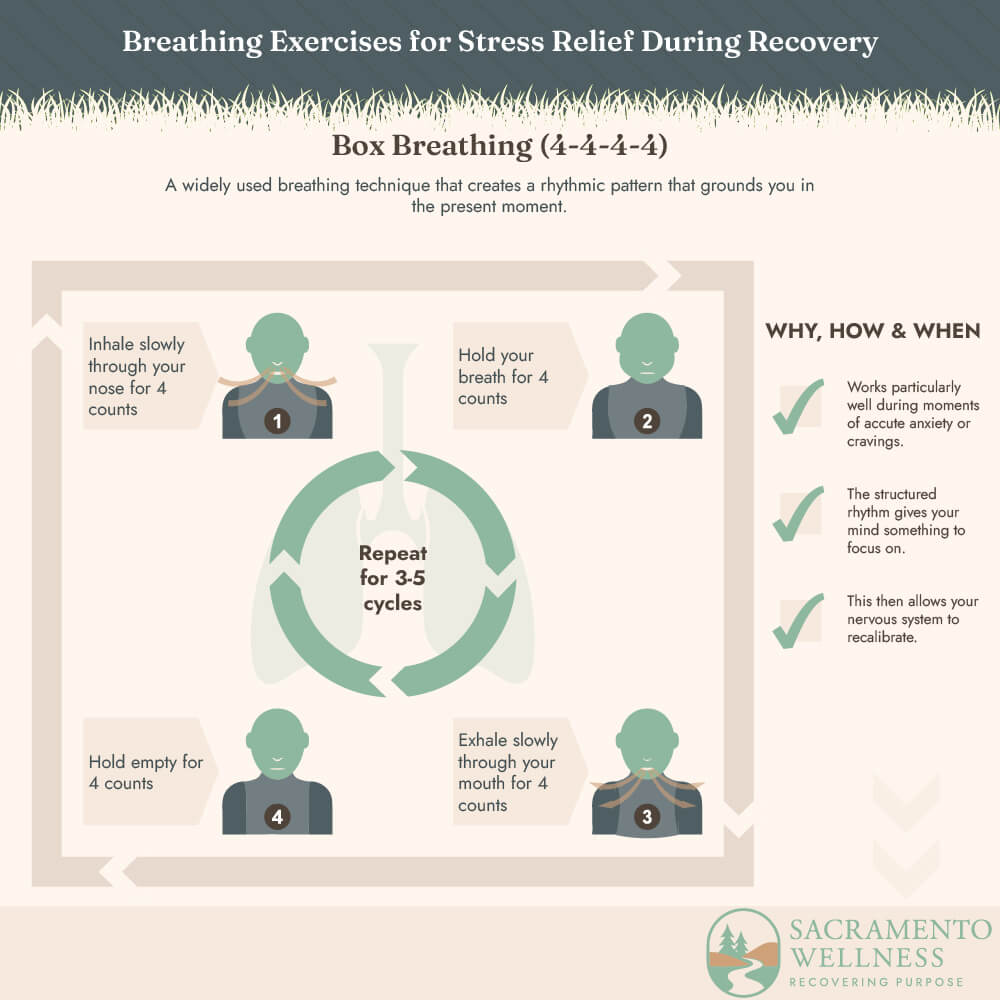
This breathing technique, used by everyone from athletes to first responders, creates a rhythmic pattern that grounds you in the present moment:
- Inhale slowly through your nose for 4 counts
- Hold your breath for 4 counts
- Exhale slowly through your mouth for 4 counts
- Hold empty for 4 counts
- Repeat for 3-5 cycles
Box breathing works particularly well during moments of acute anxiety or when you feel a craving building. The structured rhythm gives your mind something to focus on while your nervous system recalibrates.
4-7-8 Breathing
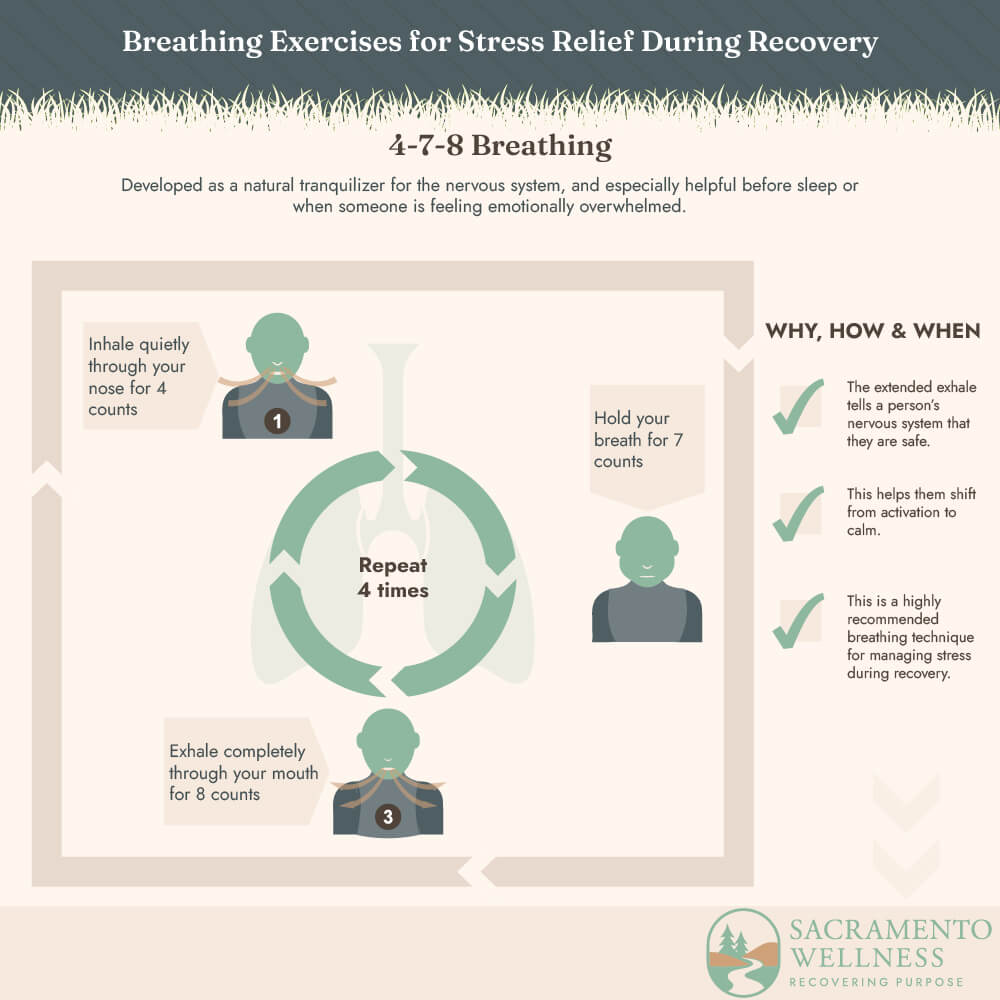
Developed as a natural tranquilizer for the nervous system, this technique is especially helpful before sleep or during emotional overwhelm:
- Inhale quietly through your nose for 4 counts
- Hold your breath for 7 counts
- Exhale completely through your mouth for 8 counts
- Repeat 4 times
The extended exhale signals safety to your nervous system, helping you move from activation to calm. This breathing exercise for stress relief can become a trusted companion during difficult moments in recovery.
Diaphragmatic Breathing
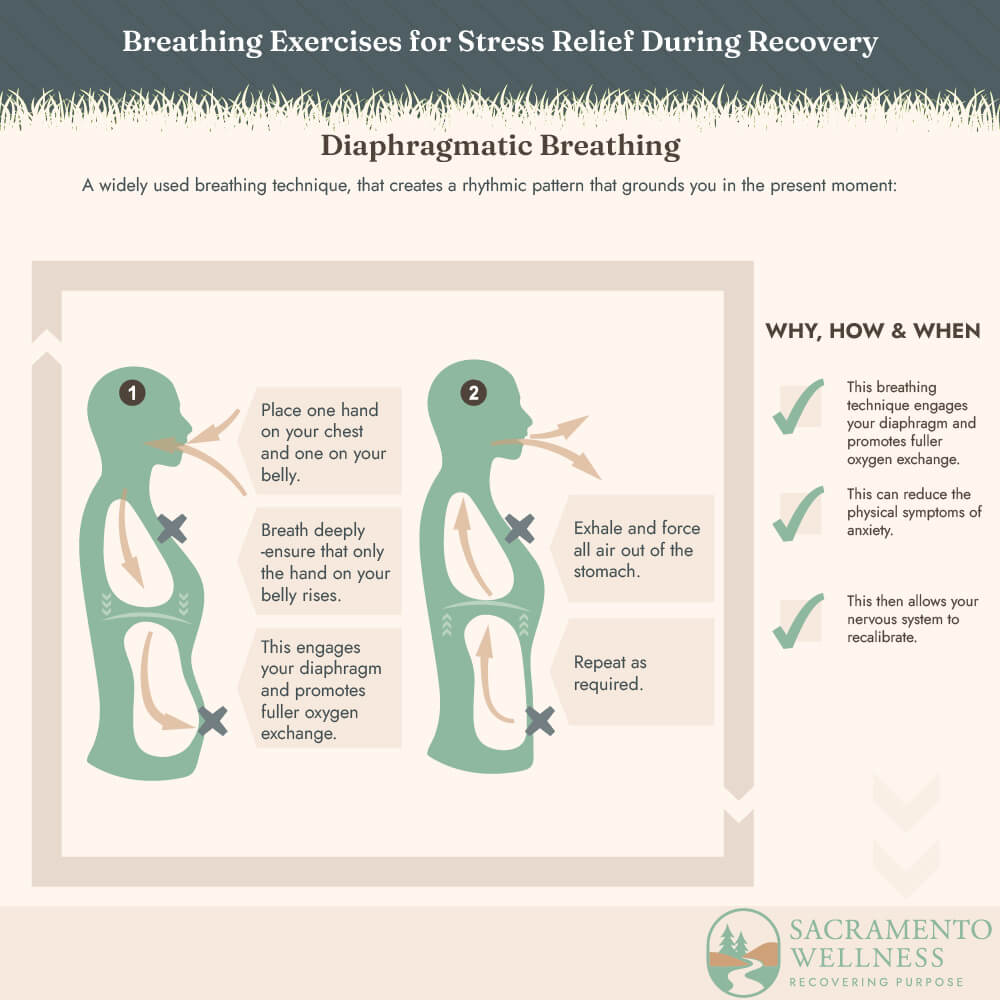
Place one hand on your chest and one on your belly. Breathe deeply so that only your belly hand rises. This engages your diaphragm and promotes fuller oxygen exchange, which can reduce the physical symptoms of anxiety.
Building Your Breathing Practice in Recovery
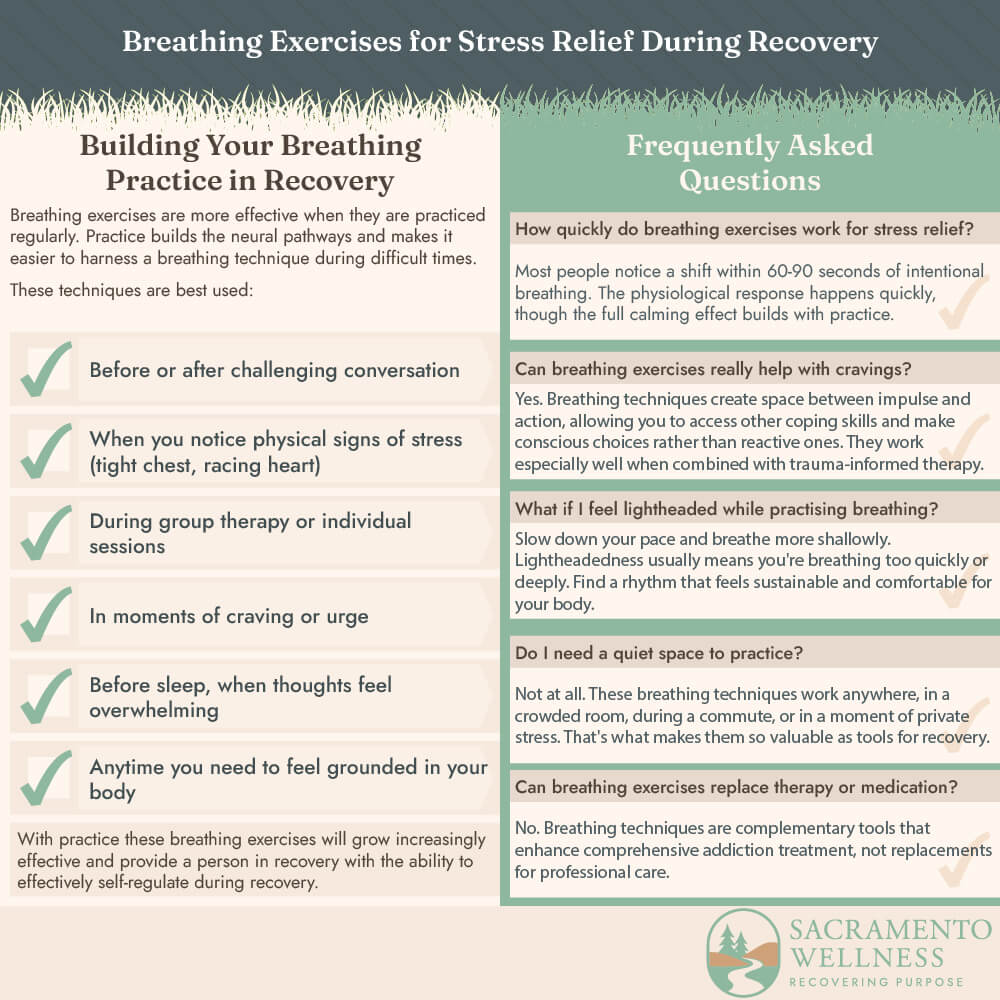
Breathing exercises aren’t just crisis tools; they’re most effective when practiced regularly. Consider setting aside five minutes each morning to practice one technique. This builds the neural pathway, making it easier to access during difficult moments.
At Sacramento Wellness, our dual diagnosis treatment program incorporates mindfulness and breathing practices alongside evidence-based therapies because we know recovery requires healing the whole person, physically, mentally, and emotionally.
When to Use These Techniques
- Before or after challenging conversations
- When you notice physical signs of stress (tight chest, racing heart)
- During group therapy or individual sessions
- In moments of craving or urge
- Before sleep, when thoughts feel overwhelming
- Anytime you need to feel grounded in your body
These breathing exercises for stress relief become more powerful the more you practice them. Think of them as building muscle; each time you use your breath intentionally, you strengthen your ability to self-regulate during recovery.
Frequently Asked Questions
How quickly do breathing exercises work for stress relief?
Most people notice a shift within 60-90 seconds of intentional breathing. The physiological response happens quickly, though the full calming effect builds with practice.
Can breathing exercises really help with cravings during recovery?
Yes. Breathing techniques create space between impulse and action, allowing you to access other coping skills and make conscious choices rather than reactive ones. They work especially well when combined with trauma-informed therapy.
What if I feel lightheaded while practicing breathing exercises?
Slow down your pace and breathe more shallowly. Lightheadedness usually means you’re breathing too quickly or deeply. Find a rhythm that feels sustainable and comfortable for your body.
Do I need a quiet space to practice?
Not at all. These breathing techniques work anywhere, in a crowded room, during a commute, or in a moment of private stress. That’s what makes them so valuable as tools for recovery.
Can breathing exercises replace therapy or medication?
No. Breathing techniques are complementary tools that enhance comprehensive addiction treatment, not replacements for professional care.
Your Path Forward
Recovery asks you to build new relationships with others, with yourself, and even with your own body. Breathing exercises offer a way to honor that relationship, to create moments of peace even when everything feels uncertain.If you’re seeking support in your recovery journey, our compassionate team at Sacramento Wellness is here. We provide personalized, evidence-based care in a peaceful environment designed for healing the whole person. Contact us today to learn more about our programs and discover how we can support you in building lasting recovery.